







Astrobiology is a multidisciplinary field that explores the potential for life beyond Earth. It combines elements of biology, chemistry, geology, and astronomy to understand how life might arise, evolve, and exist in environments vastly different from our own. At its core, astrobiology seeks to answer fundamental questions about the nature of life: What is life? How did it begin? And, perhaps most intriguingly, are we alone in the universe?
The field encompasses a wide range of topics, from the study of extreme environments on Earth—like deep-sea hydrothermal vents and acidic lakes—to the conditions on other planets and moons. Astrobiologists investigate how life could survive in these harsh conditions, which helps inform our understanding of where to look for extraterrestrial life. By studying the building blocks of life and the environments that support it, astrobiology aims to paint a clearer picture of life’s potential across the cosmos.
Astrobiology, the study of the potential for life beyond Earth, intersects with various fields, including linguistics and communication. An interesting article that delves into the nuances of language and its implications for understanding extraterrestrial communication is available at this link: Exploring the Theory of Illocutionary Forces: Performative and Constant Utterances. This article explores how the principles of language can inform our approach to potential communication with alien civilizations, highlighting the importance of understanding meaning and intent in both human and hypothetical extraterrestrial interactions.
Key Takeaways
- Astrobiology is the study of the origin, evolution, and potential for life in the universe.
- The history of astrobiology dates back to ancient civilizations and has evolved through scientific discoveries and technological advancements.
- The search for extraterrestrial life involves exploring extreme environments on Earth and studying the potential habitability of other planets and moons.
- Technology plays a crucial role in astrobiology, enabling scientists to explore distant worlds, analyze data, and develop new instruments for space exploration.
- Our solar system and exoplanets offer potential for life, with ongoing missions and research focusing on Mars, Europa, Enceladus, and other celestial bodies.
The History of Astrobiology
The roots of astrobiology can be traced back to ancient civilizations that pondered the existence of life beyond Earth. Philosophers like Aristotle speculated about the possibility of other worlds, but it wasn’t until the 20th century that astrobiology began to take shape as a scientific discipline. The advent of space exploration in the 1960s and 1970s marked a significant turning point. Missions to Mars and the outer planets sparked interest in the potential for life elsewhere in our solar system.
In 1976, NASA’s Viking missions to Mars provided some of the first direct evidence in the search for extraterrestrial life. Although the results were inconclusive, they laid the groundwork for future missions and research. The term “astrobiology” itself gained traction in the late 1990s as scientists began to formalize their studies into a cohesive field. This period saw an explosion of interest in extremophiles—organisms that thrive in extreme conditions—further expanding our understanding of life’s resilience and adaptability.
The Search for Extraterrestrial Life
The search for extraterrestrial life is one of the most exciting aspects of astrobiology. Scientists employ various methods to explore this question, ranging from robotic missions to telescopic observations. Mars has been a primary focus due to its similarities to Earth and evidence suggesting it once had liquid water.
Rovers like Curiosity and Perseverance are equipped with sophisticated instruments designed to analyze soil samples and search for signs of past microbial life. Beyond Mars, moons such as Europa and Enceladus have garnered attention due to their subsurface oceans. These icy worlds may harbor conditions suitable for life, prompting missions like NASA’s upcoming Europa Clipper, which aims to investigate these intriguing environments further.
The search isn’t limited to our solar system; astronomers also scan distant stars for signs of habitable exoplanets, expanding the scope of our quest for life.
The Role of Technology in Astrobiology
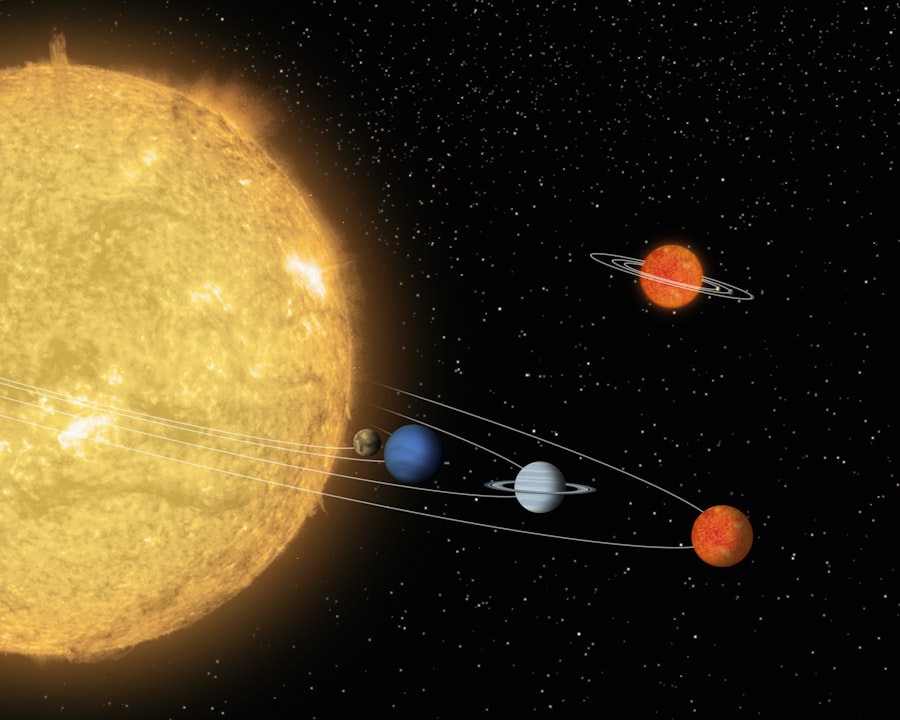
Technology plays a crucial role in advancing our understanding of astrobiology. From powerful telescopes that can detect exoplanets to sophisticated rovers capable of analyzing soil samples on other planets, technological innovations have transformed how we explore the cosmos. For instance, the Kepler Space Telescope revolutionized our knowledge of exoplanets by identifying thousands of potential candidates in just a few years.
In addition to observational technology, advancements in laboratory techniques have allowed scientists to simulate extraterrestrial environments on Earth. By recreating conditions found on other planets or moons, researchers can study how organisms might survive and adapt. This experimental approach helps bridge the gap between theoretical models and real-world possibilities, providing valuable insights into the potential for life beyond our planet.
Astrobiology, the study of the potential for life beyond Earth, intersects intriguingly with various fields, including philosophy. For those interested in exploring the philosophical implications of life in the universe, a related article can provide valuable insights. You can read more about the nature and scope of philosophical inquiry in this article, which discusses how philosophical questions about existence and consciousness may shape our understanding of astrobiological discoveries.
The Potential for Life in Our Solar System
| Category | Metric |
|---|---|
| Research | Number of scientific papers published |
| Exploration | Number of space missions dedicated to astrobiology |
| Education | Number of universities offering astrobiology programs |
| Discovery | Number of potential habitable exoplanets discovered |
When considering the potential for life within our solar system, several celestial bodies stand out. Mars remains a primary candidate due to its past conditions that may have supported microbial life. Evidence of ancient riverbeds and mineral deposits suggests that liquid water once flowed on its surface, raising questions about what forms of life might have existed there.
However, Mars isn’t the only place where scientists are looking for signs of life. Europa, one of Jupiter’s moons, is particularly intriguing because it has a subsurface ocean beneath its icy crust. This ocean could provide a stable environment for life, similar to Earth’s deep-sea hydrothermal vents. Enceladus, Saturn’s moon, also shows promise with its geysers that eject water vapor and organic compounds into space. These findings suggest that our solar system may harbor more than just barren rocks; it could be teeming with hidden ecosystems waiting to be discovered.
Exoplanets and the Search for Habitable Worlds
The discovery of exoplanets—planets outside our solar system—has opened up new avenues in the search for habitable worlds. Since the first confirmed exoplanet was discovered in 1992, thousands more have been identified, many located within their star’s habitable zone—the region where conditions might be right for liquid water to exist. This has led scientists to consider not just whether these planets exist but whether they could support life.
The study of exoplanets involves analyzing their atmospheres for biosignatures—chemical indicators that suggest biological activity. Instruments like the James Webb Space Telescope are designed to examine these atmospheres in detail, searching for gases like oxygen or methane that could hint at life processes. As technology continues to advance, our ability to detect and analyze exoplanets will only improve, bringing us closer to answering one of humanity’s oldest questions: Are we alone in the universe?
The Challenges of Finding Extraterrestrial Life
Despite significant advancements in astrobiology, finding extraterrestrial life remains a daunting challenge. One major hurdle is the vast distances involved; even our closest neighboring star systems are light-years away, making direct exploration impractical with current technology. This means that much of our search relies on indirect methods, which can be less definitive.
Additionally, defining what constitutes “life” can be complex. Life on Earth is carbon-based and relies on water, but it’s possible that extraterrestrial life could take forms we can’t yet imagine. This uncertainty complicates our search efforts and requires scientists to remain open-minded about what they might discover. Furthermore, interpreting data from distant worlds can be tricky; signals that might indicate life could also arise from non-biological processes.
The Future of Astrobiology
Looking ahead, the future of astrobiology is filled with promise and potential discoveries. As technology continues to evolve, we can expect more sophisticated missions aimed at exploring both our solar system and beyond. Upcoming missions like NASA’s Artemis program aim to return humans to the Moon and establish a sustainable presence there, which could serve as a stepping stone for future Mars missions.
Moreover, international collaboration is likely to play an increasingly important role in astrobiology research. As countries around the world invest in space exploration, sharing knowledge and resources will enhance our collective efforts in the search for extraterrestrial life. With each new discovery—whether it’s a promising exoplanet or evidence of past microbial life on Mars—we move closer to understanding our place in the universe and the possibility that we are not alone after all.
In summary, astrobiology is an exciting field that combines various scientific disciplines to explore one of humanity’s most profound questions: Is there life beyond Earth? With ongoing research and technological advancements, we are gradually uncovering the mysteries of our universe and expanding our understanding of life’s potential across different worlds.









+ There are no comments
Add yours