








The Oberth Effect is a fascinating phenomenon in the realm of space travel that can significantly enhance a spacecraft’s efficiency. Named after the German scientist Hermann Oberth, this effect describes how a spacecraft can gain more energy from its propulsion system when it is moving at high speeds, particularly during close approaches to massive celestial bodies. Essentially, the faster a spacecraft travels, the more effective its engines become, allowing for greater changes in velocity with less fuel consumption. This principle is crucial for optimizing missions and extending the capabilities of spacecraft.
At its core, the Oberth Effect highlights the relationship between speed and energy expenditure. When a spacecraft performs a burn—essentially firing its engines to change velocity—doing so while moving quickly allows it to convert more kinetic energy into useful work. This means that by timing engine burns strategically during high-speed maneuvers, mission planners can achieve significant boosts in performance. Understanding this effect is essential for engineers and scientists who design space missions, as it can lead to more efficient trajectories and reduced fuel costs.
The Oberth Effect is a fascinating phenomenon in rocketry and space travel, where a spacecraft can achieve greater efficiency and speed when it performs maneuvers at high velocities. This concept can be further explored in relation to the philosophical implications of human exploration and the nature of our existence in the universe. For a deeper understanding of the philosophical aspects that may influence our approach to space exploration, you can read the article on Indian philosophy found here: Nature, Scope, and Characteristics of Indian Philosophy.
Key Takeaways
- The Oberth Effect is a concept in space propulsion that explains how the efficiency of a rocket increases as its speed increases.
- The physics behind the Oberth Effect involves the conversion of kinetic energy into potential energy during a rocket’s high-speed burn.
- Spacecraft propulsion can harness the Oberth Effect by performing a powered burn at the periapsis of a highly elliptical orbit to maximize efficiency.
- The Oberth Effect has applications in space missions such as interplanetary travel and orbital maneuvers, allowing for more efficient use of fuel and faster travel times.
- Challenges and limitations of utilizing the Oberth Effect include the need for precise timing and the potential for increased mechanical stress on the spacecraft.
The Physics Behind the Oberth Effect: How it Works
To grasp the mechanics of the Oberth Effect, we need to delve into some basic physics principles. The effect is rooted in the conservation of energy and momentum. When a spacecraft accelerates, it increases its kinetic energy, which is the energy of motion. The key here is that the amount of kinetic energy gained from a propulsion burn is proportional to the square of the spacecraft’s velocity at the time of the burn. This means that if a spacecraft is already moving quickly, a relatively small amount of fuel can produce a significant increase in speed.
For example, consider a spacecraft approaching a planet. As it nears the planet’s gravitational field, it gains speed due to gravitational pull. If the spacecraft fires its engines at this point, it can achieve a much larger change in velocity than if it were to perform the same burn while moving slowly in deep space. This interplay between gravity and propulsion is what makes the Oberth Effect so powerful and useful for space missions.
Harnessing the Oberth Effect for Spacecraft Propulsion
Utilizing the Oberth Effect effectively requires careful planning and execution.
Spacecraft designers must consider not only the timing of engine burns but also their trajectory relative to celestial bodies.
By plotting a course that takes advantage of gravitational assists—where a spacecraft uses the gravity of a planet or moon to gain speed—mission planners can maximize the benefits of this effect. This often involves intricate calculations and simulations to ensure that every maneuver is optimized for fuel efficiency. One practical application of harnessing the Oberth Effect is during interplanetary missions. For instance, when sending a probe to Mars, engineers might design a trajectory that allows the spacecraft to swing by Earth or Venus before making its final approach.
During these flybys, the spacecraft can perform engine burns at high speeds, taking full advantage of the Oberth Effect to increase its velocity without expending excessive amounts of fuel.
This not only saves resources but also allows for more ambitious mission profiles.
Applications of the Oberth Effect in Space Missions
The Oberth Effect has been employed in various space missions throughout history, showcasing its versatility and importance in space exploration. One notable example is NASA’s Voyager missions, which utilized gravitational assists from multiple planets to achieve their remarkable speeds and reach distant destinations like Neptune and Uranus. By timing their engine burns during high-speed flybys, these missions were able to cover vast distances with minimal fuel consumption.
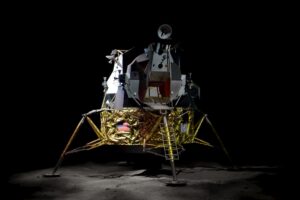
Another significant application is seen in crewed missions, such as those conducted by NASA’s Apollo program. The Apollo spacecraft used the Oberth Effect during their lunar missions by performing engine burns as they approached the Moon. This allowed them to enter lunar orbit efficiently and return to Earth with reduced fuel requirements. The careful planning of these maneuvers was crucial for ensuring mission success while adhering to strict safety protocols.
The Oberth Effect is a fascinating phenomenon in rocketry that describes how a spacecraft can gain additional energy when it performs maneuvers at high speeds, particularly when close to a massive body like a planet. This effect is crucial for optimizing fuel efficiency during space missions. For those interested in the broader implications of technology and innovation in various fields, you might find insights in a related article discussing the top business schools and the career prospects for management graduates. You can read more about it here.
Challenges and Limitations of Utilizing the Oberth Effect
| Aspect | Details |
|---|---|
| Name | Oberth Effect |
| Description | The Oberth Effect is the increase in efficiency of a rocket engine when it is used at higher speeds, particularly during a powered descent or a powered flyby of a celestial body. |
| Discovered by | Hermann Oberth, a German physicist and engineer |
| Application | Utilized in space missions to maximize the efficiency of propulsion systems |
While the Oberth Effect offers substantial advantages, it also comes with challenges and limitations that mission planners must navigate. One primary concern is the need for precise timing and trajectory calculations. Any miscalculation can lead to missed opportunities for optimal burns or even result in mission failure. The complexity of these calculations increases with longer missions or when multiple celestial bodies are involved.
Additionally, there are physical limitations to consider. The Oberth Effect is most effective when a spacecraft is moving at high speeds close to massive bodies; however, not all missions will have this opportunity. For example, deep-space missions may not benefit as much from this effect due to their distance from significant gravitational influences. Engineers must balance these factors against mission objectives and available technology to determine how best to utilize the Oberth Effect.
The Oberth Effect is a fascinating phenomenon in rocketry that highlights how a spacecraft can gain additional velocity when it performs a burn at high speeds. This effect is closely related to concepts in physics that govern motion and energy, such as those discussed in a related article on the principle of equivalence and Mach’s covariance. Understanding these principles can provide deeper insights into the mechanics of space travel and propulsion systems. For more information, you can read the article here.
Maximizing Efficiency: Strategies for Optimizing the Oberth Effect
To make the most of the Oberth Effect, mission planners employ several strategies aimed at optimizing fuel efficiency and trajectory design. One common approach is to conduct thorough simulations that model various flight paths and engine burn scenarios. By analyzing these simulations, engineers can identify optimal burn windows that align with high-speed maneuvers near celestial bodies.
Another strategy involves using advanced propulsion systems that can provide more thrust or efficiency during critical phases of flight. For instance, ion propulsion systems offer higher specific impulse compared to traditional chemical rockets, allowing for longer burns with less fuel consumption. By integrating such technologies into mission designs, planners can further enhance the benefits derived from the Oberth Effect.
Future Prospects: Advancements in Oberth Effect Utilization
As space exploration continues to evolve, so too does our understanding and application of the Oberth Effect. Future missions may leverage advancements in propulsion technology, such as nuclear thermal propulsion or electric propulsion systems, which could further enhance efficiency during high-speed maneuvers. These technologies promise to provide greater thrust while minimizing fuel requirements, making it easier to take advantage of the Oberth Effect.
Moreover, as we explore deeper into our solar system and beyond, new mission profiles will emerge that require innovative applications of this effect. For example, missions targeting asteroids or distant exoplanets may utilize gravitational assists from multiple celestial bodies in novel ways, pushing the boundaries of what we currently understand about interplanetary travel.
The Impact of the Oberth Effect on Space Exploration
In summary, the Oberth Effect plays a crucial role in modern space exploration by enabling spacecraft to achieve greater efficiency and performance during their journeys through space. By understanding its principles and applying them strategically, engineers can design missions that maximize fuel efficiency while achieving ambitious objectives. As technology continues to advance and our exploration efforts expand into deeper realms of space, harnessing this effect will remain vital for pushing the limits of what we can achieve beyond our planet.
The impact of the Oberth Effect on space exploration cannot be overstated; it has shaped how we approach mission design and execution. As we look toward future endeavors—whether they involve crewed missions to Mars or robotic explorations of distant moons—the lessons learned from utilizing this phenomenon will undoubtedly guide us toward new frontiers in our quest for knowledge beyond Earth.







+ There are no comments
Add yours