








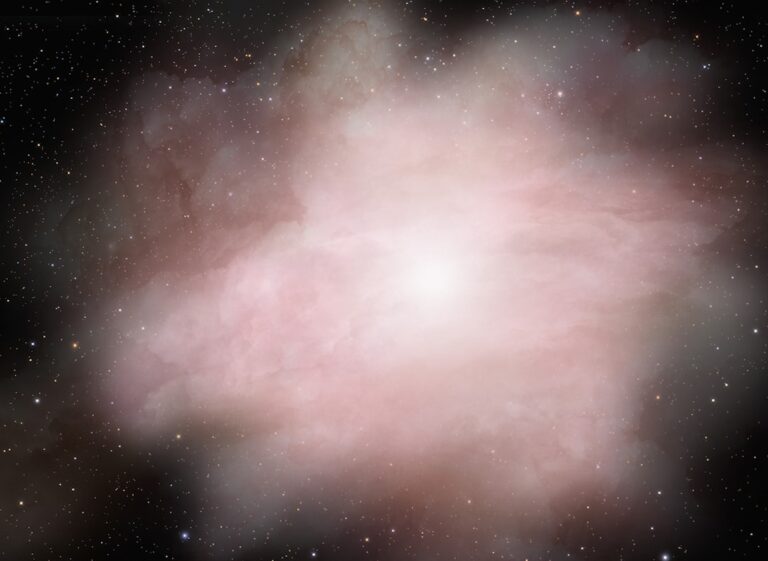
Cosmic Background Radiation (CBR) refers to the faint glow of microwave radiation that permeates the universe. This radiation is a remnant from the early stages of the universe, specifically from a time shortly after the Big Bang, when the universe was hot and dense. As it expanded, it cooled, allowing protons and electrons to combine and form neutral hydrogen atoms. This process, known as recombination, occurred approximately 380,000 years after the Big Bang, leading to the release of photons that have since traveled through space.
These photons are what we now detect as cosmic background radiation.
The CBR is remarkably uniform across the sky, with slight fluctuations in temperature that provide critical information about the early universe’s structure and composition. The average temperature of this radiation is about 2.7 Kelvin, which places it in the microwave region of the electromagnetic spectrum. The study of CBR has become a cornerstone of cosmology, offering insights into the universe’s age, composition, and the fundamental forces that shaped its evolution.
Cosmic Background Radiation is a fascinating topic that delves into the remnants of the Big Bang, providing crucial insights into the early universe. For those interested in exploring the philosophical implications of scientific discoveries, a related article discusses the development of rationalism through the works of Descartes, Spinoza, and Leibniz. This exploration highlights how these thinkers laid the groundwork for modern scientific thought, which ultimately contributes to our understanding of phenomena like Cosmic Background Radiation. You can read more about it in this article: The Development of Rationalism: Descartes, Spinoza, and Leibniz.
Key Takeaways
- Cosmic Background Radiation is the thermal radiation left over from the early universe, providing a snapshot of its infancy.
- It was discovered accidentally in 1965 by Arno Penzias and Robert Wilson, confirming predictions of the Big Bang theory.
- This radiation is crucial for understanding the universe’s origin, composition, and large-scale structure.
- Scientists measure it using satellites and ground-based telescopes to study temperature fluctuations and polarization.
- Research on Cosmic Background Radiation continues to refine cosmological models and explore the universe’s evolution and fundamental physics.
The Discovery of Cosmic Background Radiation
The discovery of cosmic background radiation is attributed to Arno Penzias and Robert Wilson, who stumbled upon it in 1965 while working at Bell Labs in New Jersey. Initially, they were investigating noise in a microwave receiver designed for satellite communication. Despite their efforts to eliminate various sources of interference, they consistently detected a persistent background noise that could not be accounted for. This noise was isotropic, meaning it was uniform in all directions, leading them to conclude that it was not a local phenomenon.
Simultaneously, researchers at Princeton University, including Robert Dicke and his team, were theorizing about the existence of this radiation as a remnant from the Big Bang. When Penzias and Wilson published their findings, it confirmed Dicke’s predictions and provided strong evidence for the Big Bang theory. The discovery earned Penzias and Wilson the Nobel Prize in Physics in 1978 and marked a significant milestone in our understanding of the universe’s origins.
Understanding the Significance of Cosmic Background Radiation
The significance of cosmic background radiation extends beyond its initial discovery; it serves as a critical tool for understanding the universe’s history and structure. The uniformity of CBR supports the idea that the universe was once in a hot, dense state and has since expanded. The slight temperature fluctuations observed in CBR are indicative of density variations in the early universe, which eventually led to the formation of galaxies and large-scale structures.
Moreover, CBR provides essential data for cosmological models. By analyzing its properties, scientists can infer key parameters such as the universe’s age, composition (including dark matter and dark energy), and rate of expansion. This information is crucial for testing various cosmological theories and refining our understanding of fundamental physics.
In essence, CBR acts as a cosmic fingerprint, revealing details about the conditions that prevailed shortly after the Big Bang.
Theories about the Origin of Cosmic Background Radiation
The prevailing theory regarding the origin of cosmic background radiation is rooted in the Big Bang model of cosmology. According to this model, the universe began as an extremely hot and dense point approximately 13.8 billion years ago. As it expanded, it cooled down, allowing for the formation of subatomic particles and eventually atoms. The release of photons during recombination marks the moment when these particles could no longer scatter light, allowing radiation to travel freely through space.
Alternative theories have also been proposed to explain CBR. Some suggest modifications to general relativity or alternative cosmological models that do not rely on a singular Big Bang event. These theories often aim to address unresolved questions about dark matter and dark energy or to explain anomalies observed in CBR measurements. However, none have gained as much acceptance as the Big Bang model, which remains supported by extensive observational evidence.
Cosmic Background Radiation is a fascinating topic that provides insights into the early universe and the Big Bang theory. For those interested in exploring related subjects, an informative article on the implications of cosmic phenomena can be found here. This resource delves into various aspects of astrophysics and how they relate to our understanding of the cosmos, making it a valuable read for anyone curious about the universe’s origins.
How Cosmic Background Radiation is Measured and Studied
| Metric | Value | Unit | Description |
|---|---|---|---|
| Temperature | 2.725 | K | Average temperature of the cosmic microwave background radiation |
| Frequency Peak | 160.2 | GHz | Frequency at which the CMB spectrum peaks |
| Wavelength Peak | 1.9 | mm | Wavelength corresponding to the peak frequency of the CMB |
| Redshift (z) | ~1100 | Dimensionless | Redshift corresponding to the surface of last scattering |
| Age of Universe at Emission | ~380,000 | years | Time after the Big Bang when the CMB was emitted |
| Intensity | ~3.14 | mW/m²/sr | Intensity of the CMB radiation at peak frequency |
| Polarization | ~10% | Percentage | Degree of polarization observed in the CMB |
| Dipole Anisotropy | 3.355 | mK | Amplitude of the dipole anisotropy in the CMB temperature |
Measuring cosmic background radiation involves sophisticated instruments designed to detect microwave signals from space. One of the most significant missions dedicated to this purpose was NASA’s Cosmic Background Explorer (COBE), launched in 1989. COBE provided detailed measurements of CBR’s temperature fluctuations and helped confirm its blackbody spectrum. Subsequent missions, such as the Wilkinson Microwave Anisotropy Probe (WMAP) and the Planck satellite, have further refined our understanding by mapping CBR with unprecedented precision.
These missions utilize sensitive detectors that can measure minute variations in temperature across different regions of the sky. By analyzing these fluctuations, scientists can extract information about the density and distribution of matter in the early universe. Advanced data analysis techniques are employed to separate genuine signals from noise and to interpret the implications of these measurements for cosmological models.
Cosmic Background Radiation and the Big Bang Theory
Cosmic background radiation serves as one of the strongest pieces of evidence supporting the Big Bang theory. The uniformity and isotropy of CBR align with predictions made by this model regarding the early universe’s conditions. The slight anisotropies observed in CBR are crucial for understanding how matter clumped together to form galaxies and other structures over billions of years.
Furthermore, CBR measurements have allowed scientists to estimate key cosmological parameters such as the Hubble constant, which describes the rate of expansion of the universe. These estimates have been instrumental in refining our understanding of cosmic evolution and have provided insights into phenomena such as dark energy’s role in accelerating expansion. In this way, CBR not only supports the Big Bang theory but also enhances our comprehension of fundamental cosmic processes.
Applications of Cosmic Background Radiation Research
Research on cosmic background radiation has far-reaching applications beyond theoretical cosmology. One significant area is in understanding fundamental physics, particularly concerning particle physics and quantum mechanics. The conditions present during the early universe can provide insights into high-energy physics that are difficult to replicate in laboratory settings.
Additionally, CBR research has implications for astrophysics and galaxy formation theories. By studying temperature fluctuations in CBR, scientists can gain insights into how galaxies formed and evolved over time. This research can inform models predicting future cosmic structures and help us understand phenomena such as galaxy clusters and superclusters.
Future Directions in Cosmic Background Radiation Research
The future of cosmic background radiation research is poised for exciting developments as new technologies emerge and observational techniques improve. Upcoming missions aim to achieve even greater precision in measuring CBR fluctuations, which could lead to breakthroughs in our understanding of dark matter and dark energy. For instance, projects like the next-generation space observatories are being designed to map CBR with unprecedented detail.
Moreover, interdisciplinary approaches combining cosmology with other fields such as particle physics may yield new insights into fundamental questions about the universe’s origins and structure. As researchers continue to analyze existing data while collecting new observations, our understanding of cosmic background radiation will likely evolve, potentially reshaping our comprehension of cosmology itself. The ongoing exploration of CBR remains a vital frontier in modern astrophysics, promising to deepen our knowledge of the cosmos for years to come.









+ There are no comments
Add yours