







Tidal force refers to the gravitational influence exerted by one celestial body on another, leading to variations in gravitational pull across the affected body. This phenomenon is most commonly observed in the relationship between the Earth and the Moon, as well as between the Earth and the Sun. Essentially, tidal forces arise from the differences in gravitational attraction experienced at different points on a body due to the proximity of another massive object.
In simpler terms, think of tidal force as the reason why we experience high and low tides in our oceans. The gravitational pull of the Moon creates bulges in the Earth’s oceans, resulting in these tidal changes. While this might seem like a straightforward concept, the implications of tidal forces extend far beyond just ocean tides, influencing various aspects of our planet and its interactions with other celestial bodies.
Tidal Force, a concept often discussed in the context of gravitational interactions between celestial bodies, has fascinating implications not only in astrophysics but also in social sciences. For a deeper understanding of how these forces can metaphorically relate to societal dynamics, you can explore the article on sociology and other social sciences at this link: Sociology and Other Social Sciences. This article delves into the intricate relationships and influences that shape human behavior and societal structures, drawing parallels to the gravitational forces that govern the movement of planets and moons.
Key Takeaways
- Tidal force is the gravitational force that causes the ocean tides and affects the Earth and the Moon.
- The science behind tidal force involves the gravitational pull of the Moon and the Sun on the Earth, creating bulges in the ocean.
- Tidal force has a significant impact on Earth, influencing ocean tides, tidal currents, and even the length of a day.
- Tidal force plays a crucial role in the formation and timing of ocean tides, affecting coastal ecosystems and human activities.
- Tidal force also influences the Moon, causing tidal locking and affecting its orbit, rotation, and potential for future energy production.
The Science Behind Tidal Force
To understand tidal force, we need to delve into some basic physics, particularly Newton’s law of universal gravitation. This law states that every mass attracts every other mass with a force that is proportional to the product of their masses and inversely proportional to the square of the distance between their centers. In practical terms, this means that as two objects get closer together, the gravitational pull they exert on each other increases.
When we apply this to the Earth-Moon system, we see that the side of Earth closest to the Moon experiences a stronger gravitational pull than the side that is farther away. This difference creates a stretching effect on Earth’s oceans, leading to the formation of tidal bulges. The Earth itself is also affected by these forces, but because it is a solid body, the effect is less pronounced compared to the fluid nature of water. The result is a dynamic interplay between gravitational forces and the physical properties of Earth and its oceans.
Impact of Tidal Force on Earth
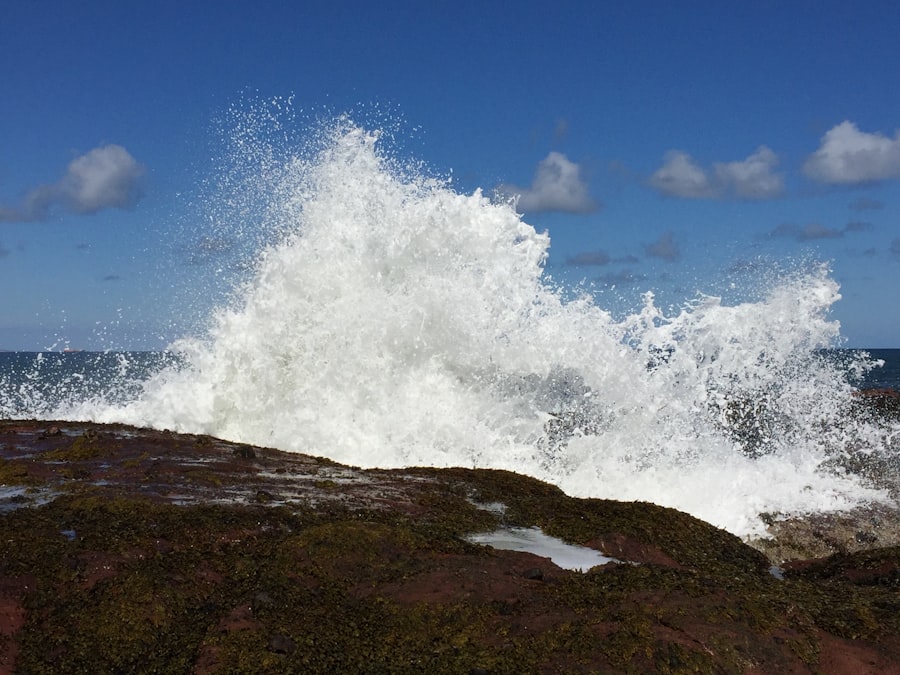
The impact of tidal forces on Earth is multifaceted. One of the most visible effects is the regular rise and fall of ocean tides, which can significantly influence coastal ecosystems and human activities. Tides play a crucial role in marine life, as many species rely on tidal patterns for feeding and breeding.
For instance, certain fish spawn during high tides when water levels are optimal for their eggs to develop. Beyond marine ecosystems, tidal forces also affect Earth’s rotation. The gravitational interaction between Earth and the Moon causes a gradual slowing of Earth’s rotation over time.
This phenomenon, known as tidal friction, results in a lengthening of the day by approximately 1.7 milliseconds per century.
While this may seem negligible on a human timescale, it has significant implications for long-term geological and astronomical processes.
Tidal Force and Ocean Tides
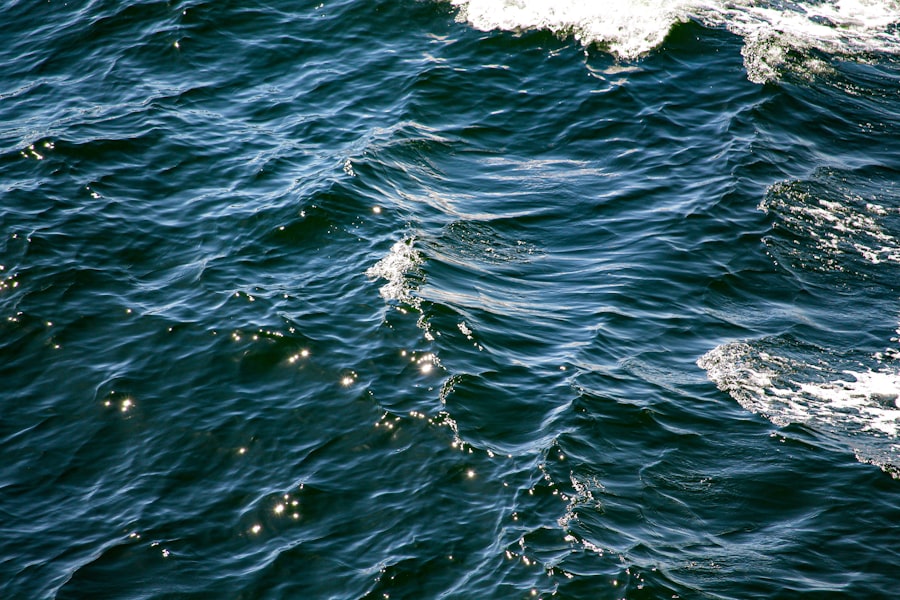
Ocean tides are perhaps the most well-known manifestation of tidal forces. The gravitational pull of both the Moon and the Sun creates two high tides and two low tides in most coastal areas each day. The alignment of these celestial bodies plays a crucial role in determining the magnitude of tides. For example, during a full moon or new moon, when the Earth, Moon, and Sun are aligned, we experience spring tides—higher high tides and lower low tides.
Conversely, during the first and third quarters of the moon, when the Moon is at right angles to the Sun relative to Earth, we experience neap tides—lower high tides and higher low tides. These variations can have significant implications for navigation, fishing, and coastal management. Understanding tidal patterns helps communities prepare for flooding during high tides and optimize fishing schedules based on tidal movements.
Tidal force is a fascinating concept in physics that describes the gravitational interaction between celestial bodies, particularly how the moon influences the Earth’s tides. For those interested in exploring the philosophical implications of such natural phenomena, a related article delves into the complexities of post-modern philosophy, including hermeneutics and critical theory. You can read more about these intriguing ideas in the article on post-modern philosophy, which offers insights into how we interpret and understand the world around us.
Tidal Force and its Influence on the Moon
| Planet | Tidal Force (N/kg) |
|---|---|
| Mercury | 0.0000006 |
| Venus | 0.0000011 |
| Earth | 0.0000020 |
| Mars | 0.0000003 |
| Jupiter | 0.000027 |
The Moon is not just a passive observer in its relationship with Earth; it is actively shaped by tidal forces as well. The gravitational pull from Earth causes the Moon to experience tidal bulges similar to those seen on Earth’s oceans. This interaction has led to a phenomenon known as synchronous rotation, where the Moon rotates on its axis at the same rate that it orbits Earth. As a result, we always see the same side of the Moon from our planet.
This synchronous rotation is a direct consequence of tidal forces acting over millions of years. The gravitational interaction has caused the Moon’s rotation to slow down until it matched its orbital period around Earth. Interestingly, this means that while we see one face of the Moon, there are features on its far side that remain hidden from our view—a fact that has intrigued astronomers for centuries.
Tidal force is a fascinating phenomenon that illustrates the gravitational interactions between celestial bodies, particularly how the moon influences the Earth’s oceans. For those interested in exploring related concepts in the context of education, an insightful article discusses the key differences and importance of standardized tests in higher education. You can read more about this topic in the article here. Understanding these differences can help students navigate their academic journeys more effectively.
Tidal Force and its Role in Energy Production
Tidal forces are not just an interesting scientific phenomenon; they also hold potential for renewable energy production. Tidal energy harnesses the kinetic and potential energy generated by tidal movements to produce electricity. This form of energy generation is particularly appealing because it is predictable and consistent compared to other renewable sources like wind or solar power.
Tidal energy systems can take various forms, including tidal stream generators that capture energy from moving water or tidal barrages that use dams to create differences in water levels. Countries like France and South Korea have already implemented successful tidal energy projects, demonstrating its viability as a sustainable energy source. As technology advances, there is growing interest in expanding tidal energy infrastructure globally.
Tidal Force and its Potential for Future Applications
Looking ahead, there are numerous potential applications for harnessing tidal forces beyond energy production. For instance, researchers are exploring how tidal forces could be utilized for transportation systems or even for stabilizing satellites in orbit. The predictable nature of tidal movements could lead to innovative solutions in various fields.
Moreover, as climate change continues to impact sea levels and weather patterns, understanding tidal forces will be crucial for coastal planning and management. Communities may need to adapt their infrastructure to account for changing tidal patterns and increased flooding risks. By leveraging our knowledge of tidal forces, we can develop more resilient coastal systems that can withstand future challenges.
The Future of Tidal Force Research
The study of tidal forces is an ongoing field of research with exciting prospects for future discoveries. Scientists are continually refining their understanding of how these forces interact with various celestial bodies within our solar system and beyond. For example, missions to explore moons like Europa or Enceladus—both believed to have subsurface oceans—could provide insights into how tidal forces influence their geological activity and potential habitability.
Additionally, advancements in technology are enabling more precise measurements of tidal forces and their effects on Earth’s systems. This could lead to better predictive models for tides and their impacts on climate change and sea-level rise. As researchers continue to explore these avenues, we may uncover new applications for tidal forces that could benefit society in unexpected ways.
In conclusion, tidal force is a fascinating aspect of physics that influences many elements of our world—from ocean tides to energy production and beyond. As we deepen our understanding of this phenomenon, we open doors to innovative solutions that can help us navigate both current challenges and future opportunities.







+ There are no comments
Add yours