









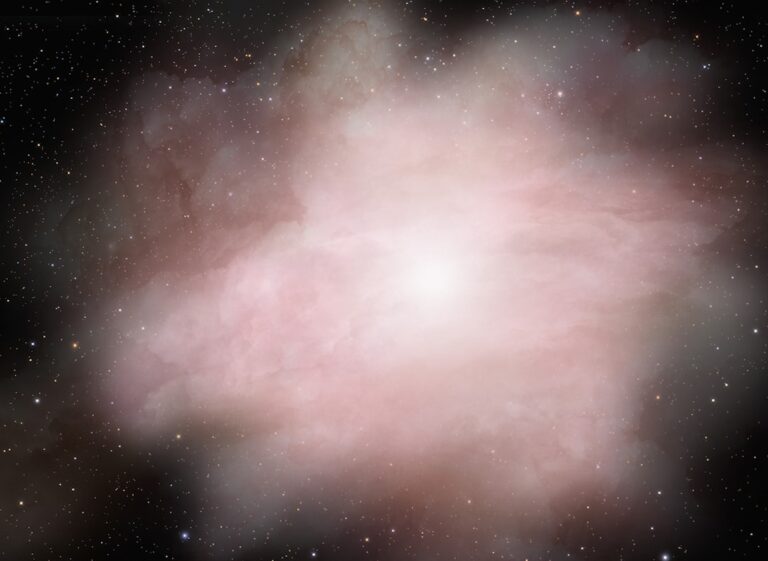
The interstellar medium (ISM) refers to the matter that exists in the space between stars within a galaxy. This vast expanse is not empty; rather, it is composed of gas, dust, and cosmic rays, which play a crucial role in the dynamics of galaxies. The ISM serves as a bridge between stars, facilitating the exchange of material and energy. Understanding the interstellar medium is essential for comprehending various astrophysical processes, including star formation, the lifecycle of stars, and the chemical evolution of galaxies.
The study of the ISM has evolved significantly over the past century. Early observations were limited to visible light, but advancements in technology have allowed astronomers to explore this medium across a broader spectrum, including radio, infrared, and X-ray wavelengths. This multi-wavelength approach has revealed a complex and dynamic environment that influences the formation and evolution of stars and galaxies. As researchers continue to investigate the ISM, they uncover new insights into its composition, properties, and its role in the universe.
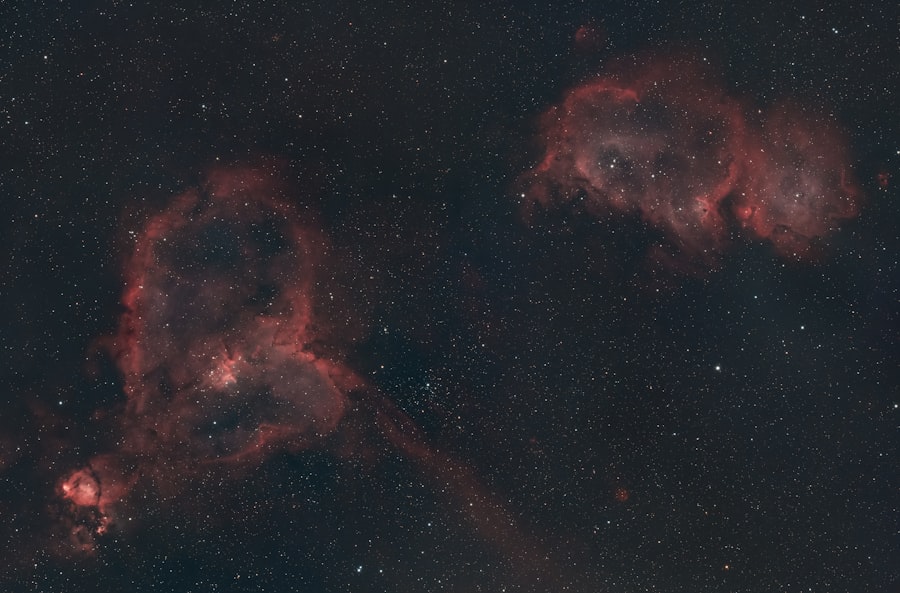
The study of the interstellar medium (ISM) is crucial for understanding the formation and evolution of stars and galaxies. A related article that explores the importance of visualizing complex relationships in scientific data is available at this link: The composition of interstellar dust is diverse, often containing silicates, carbonaceous materials, and ices. The presence of these particles affects how light travels through space and influences the thermal balance of the ISM. Understanding the composition of both gas and dust is vital for astronomers as they seek to unravel the complexities of cosmic processes. Interstellar dust exhibits several unique properties that distinguish it from other forms of matter in space. One notable characteristic is its ability to absorb and scatter light across various wavelengths. This property can obscure the visibility of distant stars and galaxies when viewed through optical telescopes. However, it also allows astronomers to study the dust itself by observing its effects on light from background sources. Infrared observations are particularly useful for probing regions obscured by dust, revealing hidden structures and star-forming regions. The size distribution of interstellar dust particles varies significantly, with most particles being on the order of nanometers to micrometers in size. This range allows them to interact with light in different ways, contributing to phenomena such as extinction and reddening of starlight. Additionally, interstellar dust plays a crucial role in the formation of molecules by providing surfaces for chemical reactions to occur. The presence of dust enhances the likelihood of molecular formation, which is essential for creating complex organic compounds that may be precursors to life. Interstellar gas is a critical component of the ISM, primarily consisting of hydrogen in its atomic and molecular forms. The gas is not uniformly distributed; instead, it exists in various phases characterized by temperature and density. These phases include hot ionized gas found in supernova remnants, warm neutral gas in regions between stars, and cold molecular clouds where star formation occurs. Each phase plays a distinct role in the lifecycle of matter within galaxies. The importance of interstellar gas extends beyond its role as a building block for stars. It acts as a reservoir for future stellar generations and influences galactic dynamics through processes such as accretion and outflows. The interaction between gas and stars can lead to feedback mechanisms that regulate star formation rates within galaxies. Understanding these interactions is essential for developing models that describe galaxy evolution over cosmic time. The study of the interstellar medium is crucial for understanding the formation and evolution of galaxies, as it plays a significant role in the lifecycle of stars and planetary systems. For those interested in exploring related concepts in a different field, you might find the article on categories and functors quite intriguing, as it delves into the foundational structures that underpin various mathematical theories, much like how the interstellar medium underlies cosmic phenomena. Properties and Characteristics of Interstellar Dust
Interstellar Gas and Its Importance

The Role of the Interstellar Medium in Star Formation
Parameter Description Typical Values Units Density Number density of particles in the interstellar medium 0.1 – 1000 particles/cm³ Temperature Thermal temperature of the gas in the ISM 10 – 10,000 Kelvin (K) Composition Primary constituents of the ISM ~90% Hydrogen, ~10% Helium, trace heavier elements By number Magnetic Field Strength Average magnetic field in the ISM 1 – 10 microgauss (µG) Ionization Fraction Fraction of ionized particles in the ISM 0.01 – 1 Dimensionless Pressure Thermal pressure of the ISM gas 10⁻¹² – 10⁻¹⁰ erg/cm³ Scale Height Vertical thickness of the ISM in the galactic disk 100 – 300 parsecs (pc) Typical Velocity Bulk velocity of ISM gas clouds 10 – 100 km/s
The interstellar medium is integral to the process of star formation. Stars form within dense regions of molecular gas known as molecular clouds or stellar nurseries. These clouds are often cold and contain a high concentration of dust and gas, providing the necessary conditions for gravitational collapse. As regions within these clouds become denser, they can fragment into smaller clumps that eventually form stars.
The process of star formation is influenced by various factors within the ISM, including turbulence, magnetic fields, and radiation pressure from nearby stars. Turbulence can trigger shock waves that compress gas and initiate star formation, while magnetic fields can help regulate the collapse process by providing support against gravitational forces. Additionally, feedback from newly formed stars can impact their surrounding environment by heating or dispersing nearby gas and dust, thereby influencing subsequent star formation events.
The study of the interstellar medium is crucial for understanding the formation and evolution of galaxies, as it is composed of gas, dust, and cosmic rays that play a significant role in star formation. A fascinating aspect of this research is how various ecological systems, including those found in extreme environments, can provide insights into the resilience of life in the universe. For instance, an article on algae ecology explores the distribution and thallus organization of these organisms, shedding light on how life adapts to different conditions. You can read more about this intriguing topic in the article here.
Exploring the Interstellar Medium with Modern Technology
Advancements in technology have significantly enhanced our ability to study the interstellar medium. Ground-based observatories equipped with powerful radio telescopes can detect emissions from neutral hydrogen and other molecules in the ISM. These observations provide valuable information about gas density, temperature, and motion within galaxies. Space-based observatories like the Hubble Space Telescope and the James Webb Space Telescope offer insights into dust properties and star-forming regions by observing across different wavelengths.
Spectroscopy has emerged as a crucial tool for analyzing the composition of interstellar gas and dust. By studying the absorption and emission lines in spectra from distant objects, astronomers can identify specific molecules present in the ISM. This technique has led to discoveries of complex organic molecules that hint at the chemical processes occurring within these regions. As technology continues to advance, future missions are expected to provide even more detailed observations of the interstellar medium.
The Interstellar Medium and Its Connection to the Origin of Life
The interstellar medium may hold clues about the origins of life on Earth and potentially elsewhere in the universe. The presence of complex organic molecules within molecular clouds suggests that some building blocks of life could form in space before being delivered to planets through processes such as comet impacts or asteroid collisions. Studies have detected amino acids and other organic compounds in meteorites that originated from these regions.
Furthermore, understanding how molecules form in the ISM can shed light on prebiotic chemistry—the chemical processes that precede biological life. The conditions present in molecular clouds may mirror those on early Earth, providing a natural laboratory for studying how life could arise from non-living matter.
As researchers continue to explore these connections, they aim to unravel the intricate relationship between cosmic chemistry and biological evolution.
Future Prospects for Studying the Interstellar Medium
The future of studying the interstellar medium looks promising with ongoing advancements in observational technology and theoretical modeling. Upcoming space missions are expected to enhance our understanding of this complex environment further. For instance, next-generation telescopes will provide unprecedented sensitivity and resolution across multiple wavelengths, allowing astronomers to probe deeper into molecular clouds and other regions within the ISM.
Additionally, interdisciplinary approaches combining astrophysics with chemistry and planetary science will likely yield new insights into how interstellar processes influence planetary systems’ formation and evolution. As researchers continue to investigate the interstellar medium’s role in shaping galaxies and potentially fostering life, our understanding of the universe’s complexities will expand significantly. The ongoing exploration promises to reveal more about our cosmic origins and our place within this vast expanse.










+ There are no comments
Add yours