









The use of arches, domes, and vaults in architecture can be traced back to ancient civilizations, where they served both structural and aesthetic purposes. The earliest known use of the arch dates back to the Sumerians around 4000 BCE, but it was the Romans who perfected its design and application. Roman engineers utilized the arch extensively in aqueducts, bridges, and monumental structures such as the Colosseum. This innovation allowed for the construction of larger and more durable buildings, as the arch effectively distributed weight and provided stability. The Roman mastery of concrete further enabled the development of expansive vaults and domes, culminating in iconic structures like the Pantheon, which features a massive coffered dome with an oculus.
As architectural styles evolved through the Middle Ages and into the Renaissance, arches and domes continued to play a crucial role. Gothic architecture introduced pointed arches, which allowed for taller structures and more intricate designs. The use of ribbed vaults became prevalent, enabling the creation of expansive ceilings adorned with elaborate decorations. The Renaissance saw a revival of classical forms, with architects like Brunelleschi employing domes in innovative ways, such as in the Florence Cathedral. This period marked a significant shift in architectural philosophy, emphasizing harmony and proportion while still leveraging the structural advantages of arches and domes.
In exploring the architectural significance of arches, domes, and vaults, it is interesting to consider how these elements reflect broader sociocultural dynamics in design. A related article that delves into the intersection of sociology and design is available at this link: Sociology: Discipline and Perspective. This article provides insights into how societal values and structures influence architectural practices, offering a deeper understanding of the context in which these iconic forms are utilized.
Key Takeaways
- Arches, domes, and vaults have evolved over centuries, shaping architectural history and techniques.
- These structures provide key structural benefits, such as distributing weight efficiently and enhancing stability.
- Beyond function, they hold deep aesthetic and symbolic meanings in various cultures and architectural styles.
- Modern design incorporates innovative materials and technology to adapt these forms for contemporary use.
- Sustainable and adaptable design approaches are driving the future development of arches, domes, and vaults.
The Structural and Functional Benefits of Arches, Domes, and Vaults in Design
Arches, domes, and vaults offer numerous structural benefits that have made them staples in architectural design. One of the primary advantages of an arch is its ability to distribute weight evenly across its structure. This characteristic allows for the construction of larger openings without compromising stability. In contrast to flat beams that can sag under weight, arches transfer loads to their supports, making them ideal for bridges and large public buildings. The inherent strength of an arch also means that less material is required compared to traditional beam construction, leading to more efficient use of resources.
Domes and vaults extend these principles further by creating three-dimensional forms that can enclose vast spaces without internal supports. The curvature of a dome allows it to withstand external forces such as wind and seismic activity more effectively than flat surfaces. This capability has made domes a popular choice for religious and civic buildings, where large open interiors are desired. Additionally, vaults can create intricate ceiling designs while maintaining structural integrity, allowing for both functional and aesthetic considerations in design.
The Aesthetic and Symbolic Significance of Arches, Domes, and Vaults in Architecture

Beyond their structural advantages, arches, domes, and vaults carry significant aesthetic and symbolic meanings in architecture. The arch has long been associated with strength and endurance, often symbolizing triumph or victory. In many cultures, arches serve as gateways or entrances that signify transition or passage from one space to another. This symbolism is evident in monumental structures such as triumphal arches, which commemorate victories or important events.
Domes often represent the heavens or the divine, making them prominent features in religious architecture. Their circular form evokes a sense of unity and wholeness, while the oculus at the top allows natural light to illuminate the interior space. This interplay between light and structure enhances the spiritual experience within places of worship. Vaults can also convey grandeur and complexity through their intricate designs, often adorned with frescoes or mosaics that tell stories or depict significant events. Together, these elements contribute to a rich tapestry of meaning that transcends mere functionality.
Contemporary Applications and Innovations of Arches, Domes, and Vaults in Design

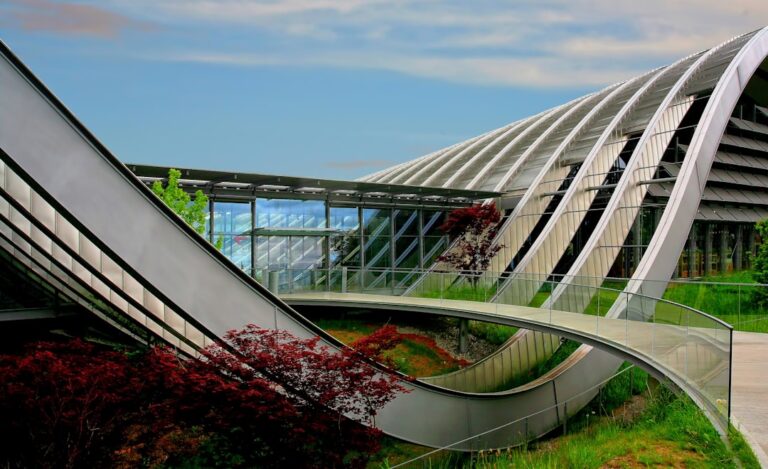
In contemporary architecture, arches, domes, and vaults continue to be relevant as designers explore new materials and technologies. Modern engineering techniques have expanded the possibilities for these forms, allowing for innovative applications that blend tradition with contemporary aesthetics. For instance, the use of lightweight materials such as steel and glass has enabled architects to create striking structures that maintain the principles of arches and domes while pushing the boundaries of design.
One notable example is the use of tensioned fabric structures that mimic the form of traditional domes while offering flexibility and adaptability. These structures can be deployed in various contexts, from sports arenas to exhibition spaces, providing large unobstructed areas while remaining visually striking. Additionally, advancements in computer-aided design (CAD) have allowed architects to experiment with complex geometries that were previously difficult to achieve. This has led to a resurgence of interest in vaults as designers explore new ways to create dynamic interior spaces that challenge conventional notions of architecture.
In exploring the fascinating world of architectural elements such as arches, domes, and vaults, one can draw intriguing parallels to the principles of balance and harmony found in various aspects of design. For instance, just as these structures rely on precise engineering to distribute weight and create aesthetic appeal, the careful selection of dietary choices can significantly impact health. A related article discusses the benefits of fruits for individuals managing diabetes, highlighting how certain foods can contribute to overall well-being. You can read more about this topic by visiting this insightful article.
Famous Examples of Arches, Domes, and Vaults in Architecture Around the World
| Structural Element | Common Materials | Typical Span Range | Load Distribution | Architectural Style Examples | Key Advantages |
|---|---|---|---|---|---|
| Arches | Stone, Brick, Concrete, Steel | 1 – 30 meters | Transfers load as compression along curve to supports | Roman, Gothic, Islamic | Efficient load transfer, aesthetic appeal, allows openings |
| Domes | Concrete, Masonry, Steel, Glass | 5 – 100+ meters | Distributes load evenly in compression across surface | Byzantine, Renaissance, Modern | Large open interior space, structural strength, iconic form |
| Vaults | Stone, Brick, Concrete | 3 – 20 meters | Load transferred along curved surfaces to walls or piers | Romanesque, Gothic | Creates covered spaces, supports heavy loads, decorative |
Throughout history, numerous iconic structures have showcased the beauty and functionality of arches, domes, and vaults. The Colosseum in Rome stands as a testament to Roman engineering prowess, featuring a series of arches that support its massive structure while allowing for an impressive seating capacity. Similarly, the Hagia Sophia in Istanbul exemplifies the grandeur of domes in Byzantine architecture; its central dome is supported by pendentives that create a seamless transition from square to circular forms.
In more recent times, the Sydney Opera House has become an emblematic example of modern architecture that employs vaulted forms to create its distinctive silhouette. The building’s shell-like structure is composed of multiple interlocking shells that function as both roof and aesthetic statement. Another notable example is the National Gallery of Art’s East Building in Washington D.C., designed by
The Future of Arches, Domes, and Vaults in Design: Sustainability and Adaptability
As architectural practices evolve in response to environmental challenges, arches, domes, and vaults are being reimagined through a lens of sustainability and adaptability. The inherent efficiency of these forms allows for reduced material usage while maintaining structural integrity, aligning with contemporary goals for sustainable design. Architects are increasingly exploring how these traditional elements can be integrated with modern sustainable practices such as passive solar design and green roofing systems.
Moreover, the adaptability of arches and domes makes them suitable for various contexts beyond traditional architecture.
For instance, temporary structures utilizing these forms can be deployed for events or emergency shelters, providing functional spaces that are both efficient and aesthetically pleasing.
As technology continues to advance, 3D printing may also play a role in creating customized arch and dome structures that minimize waste while allowing for innovative designs tailored to specific needs.
In conclusion, arches, domes, and vaults have played a significant role in architectural history while continuing to evolve in contemporary design practices. Their structural benefits, aesthetic significance, and adaptability ensure their relevance in future architectural endeavors as society seeks sustainable solutions for built environments.
FAQs
What are the main differences between arches, domes, and vaults in architectural design?
Arches are curved structures that span an opening and support weight from above. Domes are rounded vaults forming the roof of a building or structure, typically hemispherical. Vaults are extended arches that create a ceiling or roof, often in the form of barrel or groin vaults.
How do arches contribute to the stability of a building?
Arches distribute weight evenly across their curve, transferring loads to the supporting columns or walls. This allows for larger openings and supports heavier structures without collapsing.
What materials are commonly used in constructing arches, domes, and vaults?
Traditional materials include stone, brick, and concrete. Modern designs may also use steel and reinforced concrete to achieve greater spans and complex shapes.
Where are domes typically used in architectural design?
Domes are often used in religious buildings, government structures, and large public spaces to create impressive, open interiors and symbolize grandeur.
What is the historical significance of vaults in architecture?
Vaults have been used since ancient times to create durable and fire-resistant ceilings and roofs. They allowed architects to build larger and more complex interior spaces, influencing the development of Gothic and Romanesque architecture.












+ There are no comments
Add yours