









Accretion disks are rotating structures of gas, dust, and plasma that form around massive celestial objects including stars, black holes, and neutron stars. These disks develop when material is gravitationally attracted to a central object and begins to orbit rather than fall directly inward. The infalling matter conserves angular momentum, creating a flattened, disk-shaped configuration as particles spiral toward the central mass.
Within accretion disks, material gradually loses angular momentum through viscous processes and magnetic interactions, allowing it to migrate inward. This inward motion converts gravitational potential energy into kinetic energy and heat, generating electromagnetic radiation across multiple wavelengths. The efficiency of this energy conversion process makes accretion disks among the most luminous phenomena observed in the universe, with some systems outshining entire galaxies.
Accretion disks occur in diverse astrophysical environments. In star-forming regions, protoplanetary disks surround young stars and provide the material for planet formation. Around compact objects like white dwarfs, neutron stars, and black holes, accretion disks can produce X-ray emissions and relativistic jets.
Supermassive black holes at galactic centers power active galactic nuclei through accretion processes, influencing galaxy evolution on large scales. The physical processes governing accretion disks involve complex interactions between gravity, magnetohydrodynamics, radiation pressure, and thermodynamics. Temperature and density profiles within the disk vary with distance from the central object, affecting the disk’s opacity, ionization state, and emission characteristics.
These mechanisms determine the disk’s structure, stability, and observational properties across different astronomical systems.
Key Takeaways
- Accretion disks are rotating disks of gas and dust formed around massive celestial objects like black holes and stars.
- They play a crucial role in astrophysics by facilitating mass transfer and energy emission in various cosmic phenomena.
- Observations of accretion disks provide insights into the behavior of matter under extreme gravitational forces.
- The physics of accretion disks involves complex processes including viscosity, magnetohydrodynamics, and radiation.
- Despite advances, many mysteries about accretion disk dynamics and evolution remain, driving ongoing and future research.
The Formation and Structure of Accretion Disks
The formation of an accretion disk typically begins with a cloud of gas and dust that collapses under its own gravity. As this material condenses, it begins to rotate due to the conservation of angular momentum. The rotation causes the material to flatten into a disk shape rather than collapsing into a singular point.
This process is often observed in star-forming regions, where protostars are surrounded by rotating disks of material that will eventually form planets and other celestial bodies. The structure of an accretion disk is characterized by several distinct layers and regions. The innermost part of the disk, closest to the central object, is typically hotter and denser due to the intense gravitational forces at play.
This region can reach temperatures high enough to emit X-rays, making it detectable by space-based observatories. As one moves outward from the center, the temperature and density decrease, leading to a cooler outer region that may contain more solid particles and ice. The dynamics within these disks are governed by complex interactions between gravity, pressure, and viscosity, which can lead to phenomena such as turbulence and spiral waves.
The Role of Accretion Disks in Astrophysics
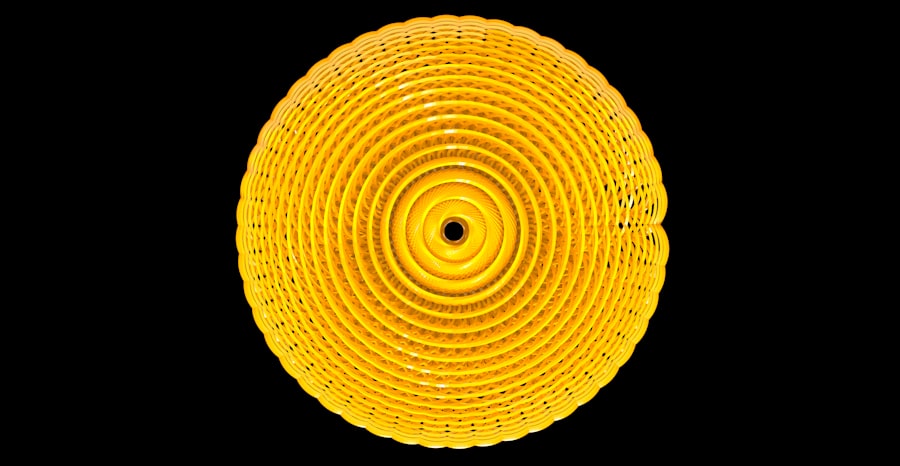
Accretion disks play a pivotal role in various astrophysical processes. One of their most significant contributions is in the context of star formation. In regions where dense molecular clouds collapse, accretion disks facilitate the transfer of material onto protostars, allowing them to grow in mass and eventually ignite nuclear fusion in their cores.
This process is fundamental to the lifecycle of stars and influences their subsequent evolution. In addition to star formation, accretion disks are crucial for understanding the behavior of black holes and neutron stars. When matter falls into a black hole, it forms an accretion disk that emits vast amounts of energy as it spirals inward.
This energy can be observed as X-rays or gamma rays, providing astronomers with valuable information about the properties of black holes and their surrounding environments. Furthermore, accretion disks are believed to be responsible for the powerful jets observed in some active galactic nuclei (AGN), where material is ejected at relativistic speeds along the rotational axis of the disk.
Observing and Studying Accretion Disks
The study of accretion disks has been greatly enhanced by advancements in observational technology.
Each wavelength provides unique insights into the physical conditions within the disk and its interaction with the central object.
For instance, X-ray observatories like NASA’s Chandra X-ray Observatory have been instrumental in studying accretion disks around black holes. By analyzing X-ray emissions from these regions, astronomers can infer properties such as temperature, density, and even the spin of the black hole itself. Similarly, radio telescopes can observe the cooler outer regions of accretion disks, revealing information about their composition and structure.
The combination of multi-wavelength observations allows researchers to build comprehensive models of accretion disk behavior and dynamics.
Understanding the Physics of Accretion Disks
| Parameter | Description | Typical Range / Value | Units |
|---|---|---|---|
| Inner Radius | Closest distance from the central object to the disk’s inner edge | 1.2 – 6 | Schwarzschild radii (R_s) |
| Outer Radius | Farthest extent of the accretion disk | 10^3 – 10^5 | Schwarzschild radii (R_s) |
| Temperature | Effective temperature of the disk material | 10^4 – 10^7 | Kelvin (K) |
| Mass Accretion Rate | Rate at which mass is transferred onto the central object | 10^-10 – 10^-4 | Solar masses per year (M☉/yr) |
| Luminosity | Energy output from the accretion disk | 10^36 – 10^40 | erg/s |
| Viscosity Parameter (α) | Dimensionless parameter describing disk viscosity | 0.01 – 0.4 | Dimensionless |
| Disk Thickness (H/R) | Ratio of disk height to radius | 0.01 – 0.1 | Dimensionless |
| Orbital Velocity | Velocity of matter orbiting in the disk | 10^4 – 10^5 | km/s |
The physics governing accretion disks is complex and involves various processes that dictate their behavior. One key aspect is viscosity, which plays a crucial role in transporting angular momentum within the disk. Theories such as the Shakura-Sunyaev model describe how turbulence within the disk can lead to efficient angular momentum transfer, allowing material to spiral inward while conserving energy.
Magnetic fields also significantly influence accretion disk dynamics. The presence of magnetic fields can lead to phenomena such as magnetorotational instability (MRI), which enhances turbulence and facilitates angular momentum transport. This interplay between gravity, viscosity, and magnetic fields creates a rich tapestry of physical processes that researchers continue to explore through both theoretical models and simulations.
Thermal processes within accretion disks are equally important. As material falls toward the central object, it heats up due to gravitational compression and frictional forces. This heating can lead to various emission mechanisms depending on the temperature regime—ranging from thermal radiation in cooler regions to X-ray emissions in hotter areas near black holes.
Understanding these thermal processes is essential for interpreting observational data and constructing accurate models of accretion disk behavior.
Accretion Disks in Different Astronomical Objects

Accretion disks are not confined to a single type of astronomical object; they manifest in various contexts throughout the universe. In young stellar objects (YSOs), for example, accretion disks are integral to star formation processes. These disks provide a reservoir of material that feeds into forming stars while also facilitating planet formation through processes such as dust coagulation and gravitational interactions.
In binary systems where one star is compact—such as a white dwarf or neutron star—accretion disks can form from material stripped from its companion star. This process can lead to phenomena such as novae or type Ia supernovae when enough material accumulates on the compact object’s surface. In active galactic nuclei (AGN), supermassive black holes at the centers of galaxies are surrounded by massive accretion disks that can emit enormous amounts of energy across the electromagnetic spectrum.
The Mysteries and Unsolved Questions of Accretion Disks
Despite significant advancements in our understanding of accretion disks, many mysteries remain unsolved. One pressing question involves the exact mechanisms behind angular momentum transport within these disks. While models like the Shakura-Sunyaev framework provide valuable insights, they do not fully account for all observed phenomena.
Researchers continue to investigate alternative mechanisms that could explain discrepancies between theoretical predictions and observational data. Another area ripe for exploration is the role of magnetic fields in shaping accretion disk dynamics. While magnetic fields are known to influence turbulence and angular momentum transport, their precise effects remain poorly understood.
Questions about how magnetic fields interact with other forces within the disk—such as gravity and pressure—are still being actively researched. Additionally, there are unresolved questions regarding the formation and evolution of accretion disks themselves. For instance, how do these disks evolve over time?
What factors determine their stability or instability? Understanding these aspects is crucial for building comprehensive models that accurately reflect the diverse environments in which accretion disks exist.
The Future of Accretion Disk Research
The future of accretion disk research holds great promise as new observational technologies and theoretical frameworks continue to emerge. Upcoming space missions like NASA’s James Webb Space Telescope (JWST) will provide unprecedented capabilities for studying accretion disks across various wavelengths. With its ability to observe infrared emissions from distant objects, JWST will enhance our understanding of star-forming regions and provide insights into the early stages of accretion disk formation.
Moreover, advancements in computational astrophysics will allow researchers to simulate complex interactions within accretion disks with greater accuracy than ever before. These simulations will help bridge gaps between theory and observation by providing detailed predictions that can be tested against real-world data. As our understanding deepens, researchers will likely uncover new connections between accretion disks and other astrophysical phenomena—potentially leading to breakthroughs in our comprehension of cosmic evolution and structure formation across the universe.
The ongoing exploration of these enigmatic structures promises to reveal even more about the intricate workings of our universe in the years to come.
Accretion disks are fascinating structures that play a crucial role in the formation of celestial bodies and the dynamics of galaxies.










+ There are no comments
Add yours