








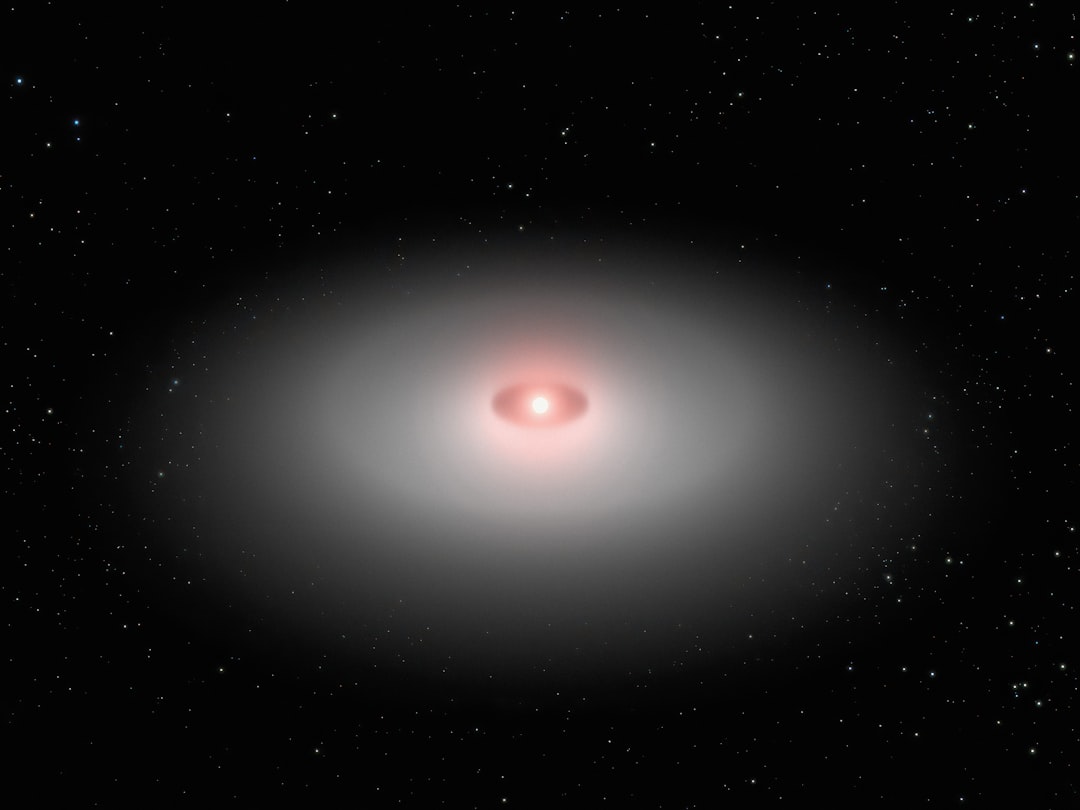
The Cosmic Wall refers to massive structures in the universe that represent significant cosmological phenomena. These enormous formations are organized arrangements of galaxies that reveal the cosmos’s fundamental architecture. Cosmic Walls form part of the universe’s large-scale structure, which encompasses galaxy clusters, superclusters, and voids.
This complex arrangement of matter and energy offers essential insights into universal evolution and its shaping forces. Through studying these walls, scientists gather information about fundamental universal components, including dark matter and dark energy. These cosmic structures have significance beyond observational interest; they challenge current understanding of gravity, matter distribution, and spacetime fabric.
Research on these formations provides scientists with insights into post-Big Bang conditions and their influence on galaxy and cluster formation over billions of years. The Cosmic Wall effectively serves as a record of universal history, displaying patterns and relationships crucial for understanding humanity’s cosmic position.
Key Takeaways
- The Cosmic Wall is a massive structure in the universe formed by the distribution of galaxies and dark matter.
- Dark matter plays a crucial role in shaping the Cosmic Wall and influencing galaxy formation within it.
- Observations and simulations are key tools for uncovering the properties and dynamics of the Cosmic Wall.
- The Cosmic Wall is integral to the large-scale structure of the universe, linking galaxy clusters and voids.
- Understanding the Cosmic Wall has significant implications for cosmology and astrophysics, guiding future research directions.
The Formation and Structure of the Cosmic Wall
The formation of the Cosmic Wall is a complex process that involves gravitational interactions among matter in the universe. Initially, after the Big Bang, matter was distributed relatively uniformly throughout space. However, slight fluctuations in density led to gravitational instabilities that caused matter to clump together over time.
These clumps eventually grew into galaxies, which then formed larger structures such as galaxy clusters and superclusters. The Cosmic Wall is essentially a manifestation of this hierarchical structure formation, where regions of higher density coalesce to create vast sheets or walls of galaxies. The structure of the Cosmic Wall is characterized by its filamentary nature, where galaxies are not randomly distributed but rather aligned along filaments that connect clusters and superclusters.
This filamentary structure is a result of cosmic web dynamics, where dark matter plays a crucial role in shaping these formations. Observations from telescopes such as the Hubble Space Telescope and data from large-scale surveys like the Sloan Digital Sky Survey have provided evidence for this intricate web-like arrangement. The Cosmic Wall is not a singular entity but rather part of a larger network that includes voids—regions with significantly fewer galaxies—interspersed throughout.
The Role of Dark Matter in the Cosmic Wall
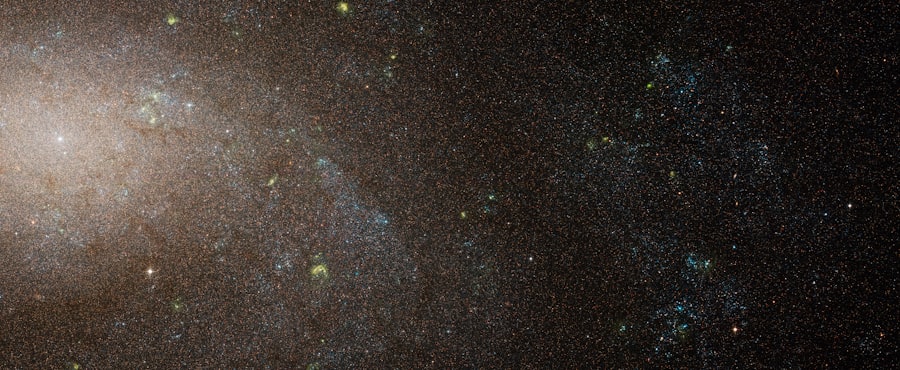
Dark matter is an essential component in understanding the Cosmic Wall, as it constitutes approximately 27% of the universe’s total mass-energy content. Unlike ordinary matter, dark matter does not emit, absorb, or reflect light, making it invisible to traditional observational techniques. However, its presence is inferred through its gravitational effects on visible matter.
In the context of the Cosmic Wall, dark matter acts as a scaffolding that influences how galaxies cluster and form structures. The gravitational pull exerted by dark matter helps to draw ordinary matter together, facilitating the formation of galaxies within these walls. Simulations that incorporate dark matter reveal that it plays a pivotal role in determining the distribution and density of galaxies within these cosmic structures.
For instance, regions with higher concentrations of dark matter tend to host more galaxies, while areas with less dark matter are often devoid of significant galactic presence. This relationship underscores the importance of dark matter in shaping not only the Cosmic Wall but also the broader cosmic web.
The Cosmic Wall’s Influence on Galaxy Formation
The influence of the Cosmic Wall on galaxy formation is profound and multifaceted. As galaxies form within these walls, their interactions are governed by both gravitational forces and environmental factors unique to their surroundings. Galaxies located within dense regions of the Cosmic Wall often experience different evolutionary paths compared to those situated in more isolated environments.
For example, galaxies in high-density regions may undergo more frequent mergers and interactions, leading to larger and more complex galactic structures. Moreover, the environment provided by the Cosmic Wall can affect star formation rates within galaxies. In denser regions, gas can be compressed more effectively due to gravitational interactions, potentially leading to bursts of star formation.
Conversely, in less dense areas or voids, galaxies may experience a more quiescent evolution with lower star formation rates. This variation highlights how the Cosmic Wall not only serves as a backdrop for galaxy formation but actively shapes their development through environmental influences.
Uncovering the Mysteries of the Cosmic Wall through Observations and Simulations
| Metric | Description | Value | Unit |
|---|---|---|---|
| Length | Approximate length of the cosmic wall | 500 | Million light-years |
| Thickness | Average thickness of the wall | 10 | Million light-years |
| Distance from Earth | Distance to the nearest part of the wall | 1.2 | Billion light-years |
| Number of Galaxies | Estimated number of galaxies within the wall | 100,000 | Galaxies |
| Redshift | Average redshift of galaxies in the wall | 0.3 | z (dimensionless) |
To unravel the mysteries surrounding the Cosmic Wall, astronomers employ a combination of observational techniques and computer simulations. Observationally, large-scale surveys using advanced telescopes have mapped out galaxy distributions across vast regions of space. These surveys provide critical data on how galaxies are clustered and how they relate to one another within the Cosmic Wall framework.
For instance, observations from projects like the Dark Energy Survey have revealed intricate details about galaxy clustering patterns that align with theoretical predictions based on dark matter models. Simulations play an equally vital role in understanding the Cosmic Wall’s formation and evolution. By utilizing sophisticated computational models that incorporate physics governing gravity and dark matter interactions, researchers can recreate cosmic structures over time.
These simulations allow scientists to test various hypotheses about how different factors influence galaxy formation and clustering within walls. For example, simulations can explore scenarios involving varying amounts of dark energy or modifications to gravity itself, providing insights into how these changes might affect large-scale structures like the Cosmic Wall.
The Connection Between the Cosmic Wall and the Large Scale Structure of the Universe
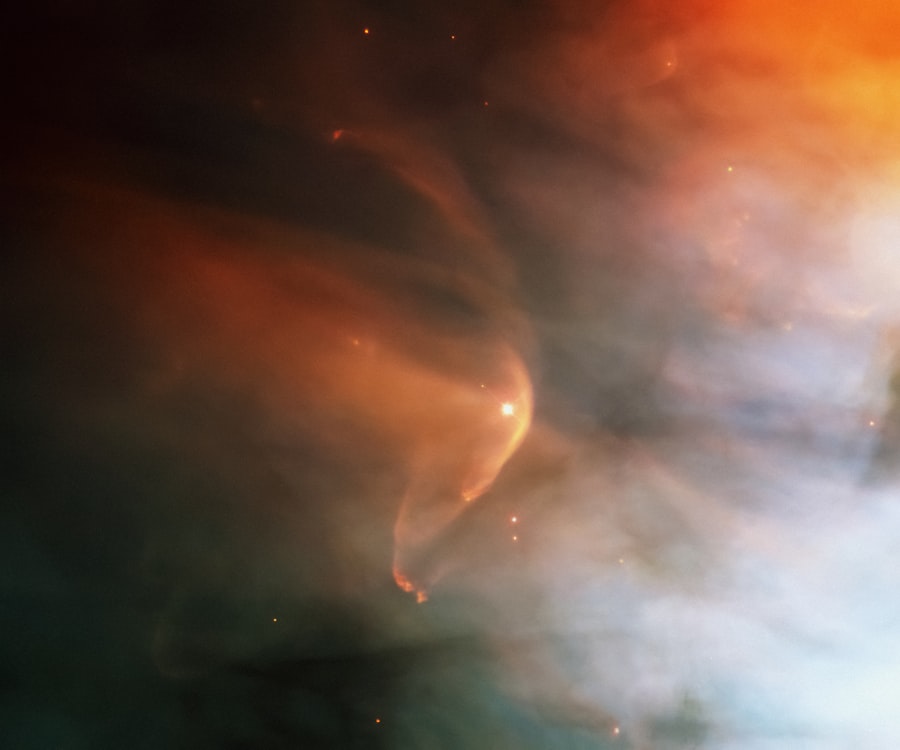
The Cosmic Wall is intrinsically linked to the large-scale structure (LSS) of the universe, which encompasses all forms of matter distribution on cosmic scales. The LSS includes not only walls but also filaments and voids that together form a complex web-like structure throughout space.
The relationship between the Cosmic Wall and LSS is further emphasized by observations from cosmic microwave background radiation (CMB) studies. The CMB provides a snapshot of the universe when it was just 380,000 years old, revealing fluctuations in temperature that correspond to density variations in early cosmic structures. These fluctuations laid the groundwork for later formations like walls and filaments as gravity acted upon them over billions of years.
Thus, studying these early conditions helps astronomers understand how current structures like the Cosmic Wall came into being.
Implications of Understanding the Cosmic Wall for Cosmology and Astrophysics
Understanding the Cosmic Wall has far-reaching implications for both cosmology and astrophysics. It challenges existing theories about gravity and dark matter while providing a framework for exploring new models that could explain observed phenomena more accurately. For instance, insights gained from studying these walls can inform our understanding of cosmic inflation—the rapid expansion that occurred shortly after the Big Bang—and how it set initial conditions for structure formation.
Moreover, comprehending how walls influence galaxy formation can lead to advancements in our knowledge about star formation processes and galactic evolution over time. This understanding can also impact our interpretations of galaxy surveys and help refine methods for estimating cosmological parameters such as Hubble’s constant or dark energy density. As researchers continue to probe deeper into these cosmic structures, they may uncover new physics that could reshape our understanding of fundamental forces governing the universe.
Future Research and Exploration of the Cosmic Wall
The future research landscape surrounding the Cosmic Wall is poised for significant advancements as technology continues to evolve. Upcoming observational projects like the James Webb Space Telescope (JWST) promise to provide unprecedented views into distant galaxies and their environments within these walls. By capturing high-resolution images across various wavelengths, JWST will enable scientists to study galaxy formation processes in greater detail than ever before.
In addition to observational advancements, ongoing developments in computational astrophysics will enhance our ability to simulate cosmic structures accurately. As researchers refine their models to include more complex physics—such as feedback mechanisms from supernovae or active galactic nuclei—they will gain deeper insights into how these factors interact with large-scale structures like the Cosmic Wall. Collaborative efforts between observational astronomers and theoretical physicists will be crucial in pushing forward our understanding of this enigmatic aspect of our universe.
As we stand on the brink of new discoveries regarding the Cosmic Wall, it is clear that this area of research holds immense potential for unraveling some of cosmology’s most profound questions about our universe’s origins and evolution. The journey into understanding these colossal structures promises not only to illuminate our past but also to guide us toward future explorations beyond our current horizons.
In exploring the concept of the Wall (Cosmic), one can draw parallels to the philosophical underpinnings that shape our understanding of existence and reality. A related article that delves into the nature and characteristics of philosophical thought is available at










+ There are no comments
Add yours